This page is general information, not insurance or legal advice. Your policy and your insurer decide what is covered. For advice on your own claim, talk to your agent, your insurer or an attorney.
Does homeowners insurance cover a new roof?
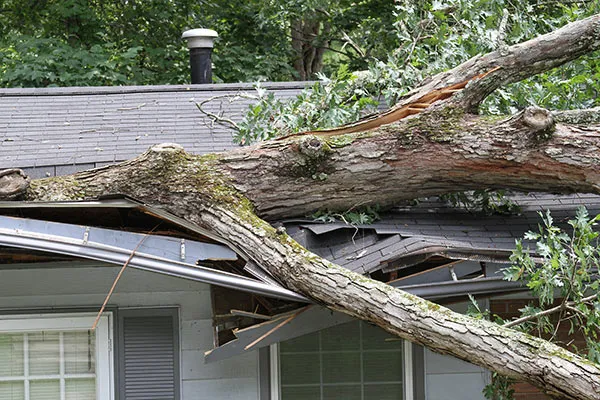
Homeowners insurance covers a roof when a sudden event named in the policy damages it, such as wind, hail or a fallen tree. It does not pay for a roof that has simply worn out. Whether you get a full new roof or a repair depends on how much is damaged and what your policy says. Read the declarations page and the roof section, or ask your agent to walk you through them.
Does insurance cover a leak from an old roof?
Usually not. Policies generally exclude wear and tear, old age and lack of maintenance. That matters in Scottsdale, where the typical tile roof leak comes from underlayment that has aged in the heat. If a storm tears a hole in an old roof, the storm damage may be covered while the worn-out parts are not. The insurer's adjuster makes that call.
How do I know if my roof has hail or wind damage?
From the ground, wind damage shows as missing or lifted shingles, tiles that have slipped or blown off, loose ridge caps and metal trim bent back. Hail damage is harder to see. Hail is occasional in the Phoenix area, and when it comes it can crack tiles, bruise shingles, dent metal vents and pit the coating on a foam roof. Do not climb up to check. We inspect and photograph it, and the photos are yours to share with your insurer.
How does a roof insurance claim work?
- You photograph the damage and stop further damage, for example with a tarp. Keep the receipts.
- You report the claim to your insurer.
- The insurer sends an adjuster to inspect the roof.
- The insurer issues an estimate and a first payment, less your deductible.
- You choose a roofer and sign a contract for the work.
- The work is done. If your policy pays replacement cost, the held-back amount is released after you show the work is complete.
We can inspect the roof and give you a written quote and photos. We are roofers, not public adjusters, and we do not negotiate your claim for you.
What is the difference between actual cash value and replacement cost?
Actual cash value pays what the damaged roof was worth at its age, after depreciation. Replacement cost pays what it costs to replace it with new materials of like kind. On an older roof the gap can be large. Some policies pay replacement cost on the house but actual cash value on the roof, or switch once the roof passes a certain age. Check which one you have before a storm, not after.
How does recoverable depreciation work?
Recoverable depreciation is the part of a replacement cost claim the insurer holds back until the work is done. The first payment is the actual cash value, less your deductible. After the roof is finished, you send the final invoice and the insurer releases the held amount, up to what was actually spent. Policies set a time limit for claiming it, so ask for that date in writing. On an actual cash value policy the depreciation is not recoverable at all.
Should I call the roofer or the insurance company first?
If water is coming in, call a roofer first to stop it, and tell your insurer promptly. If there is no active leak, either order works. Many homeowners have a roofer inspect first, because a claim for damage that turns out to be below the deductible, or to be wear, may still go on your record. Ask your agent how your insurer treats that.
Can a roofer pay or waive my deductible?
No. Arizona law forbids it. Under A.R.S. 32-1158.02, when any part of a residential roofing job is paid from insurance proceeds, the contractor may not pay, issue payment for or promise to pay any deductible on the policy, or rebate the deductible directly or indirectly. The deductible is your share of the loss. An offer to cover it is a sign to choose another roofer.
The same statute requires the contract to describe the work in detail, including the square footage of the repair or replacement area. It also requires a notice that you may cancel within 72 hours after you are told your insurer has denied the claim. Read the cancellation notice in any roofing contract before you sign.
A roofer knocked on my door after a storm. What should I do?
Take the card and decide later. After a big monsoon storm, crews knock on doors across the Valley, and some are not licensed here. Look up the company on the Arizona Registrar of Contractors website before you let anyone on the roof, and do not sign anything on the doorstep. For a sale made at your home, A.R.S. 44-5002 lets you cancel until midnight of the third business day after you sign. The Arizona Attorney General's advice is to verify the licence, get more than one written estimate and never pay in full up front.
The adjuster's number is lower than the roofer's quote. Who pays the difference?
Unless the insurer agrees to raise its figure, you do, so start by finding out why the numbers differ. Compare the two documents line by line. The adjuster may have left out items, measured a smaller area or priced a repair where the roofer priced replacement. Send your insurer the roofer's written quote and photos and ask for the differences to be reviewed; insurers have a process for adding missed items. If you still disagree, your policy describes the dispute steps. You can also contact the Arizona Department of Insurance and Financial Institutions, or speak to an attorney.
How long do I have to file a roof claim?
Your policy sets how long you have to file, and you should treat the deadline as short. Policies require prompt notice of a loss, and some set a fixed period for wind and hail claims. We could not confirm one Arizona deadline that applies to every policy, so we do not give a number. Report storm damage as soon as you find it and ask your insurer for the deadline in writing.
Will a claim raise my premium?
It may. Insurers set premiums from many things, including claims on your record and storm losses across your area. One storm claim does not always raise the price, and rates can rise after a bad monsoon season even if you never claim. Ask your agent before you file if the damage is close to your deductible.
Will insurance pay for the whole roof or only the damaged part?
Insurance pays to repair what the covered event damaged, which is often only part of the roof. It pays for the whole roof when damage is spread across it, or when a repair cannot reasonably be done. Brittle shingles that break when a neighbouring one is lifted are one common reason. The adjuster decides, based on the policy. A roofer's photos showing damage on every slope, or a failed repair test, are the evidence that supports a larger scope.
My damaged shingles or tiles are discontinued and will not match. Does insurance pay for the rest?
Sometimes, and your policy says. Discontinued shingle lines and tile profiles are common on older Scottsdale roofs. Some policies pay to replace enough of the roof for a reasonable match, and others exclude matching in plain words. We could not confirm one Arizona matching rule that applies to every policy, so we do not state one. Ask your insurer for its position in writing, and ask the Arizona Department of Insurance and Financial Institutions if you think the answer is wrong. For tile, salvage yards in the Valley often stock older profiles, which can make a matching repair possible.
My roof claim was denied. What can I do?
Ask for the denial in writing, with the policy wording it relies on. This is general information, not legal advice. Then get a roofer's inspection with dated photos, and ask the insurer to re-inspect if the facts differ from what its adjuster recorded. Your policy describes its own dispute steps. If you believe the insurer broke Arizona law, you can file a complaint with the Arizona Department of Insurance and Financial Institutions, and an attorney can advise on anything further. A denial for wear and tear is often correct on a roof that has simply aged.
Do I need a public adjuster?
Most small, simple roof claims do not need a public adjuster. A public adjuster works for you, not the insurer, and is paid a fee that normally comes out of your settlement. Arizona licenses adjusters through the Department of Insurance and Financial Institutions, so check the licence before you sign with one. They are worth considering on a large or disputed claim where you and the insurer are far apart. Read the fee and the contract length first. We are roofers. We supply the inspection, photos and quote, and we do not act as adjusters.
I lost about 15 shingles and my deductible is $2,500. Is it worth filing a claim?
Probably not worth filing, if that is all the damage. The insurer pays only what the repair costs above your deductible. HomeGuide's national figure for replacing 3 to 25 shingles is $100 to $300, which is not our quote but is far below $2,500. A claim that pays nothing may still sit on your record. Have a roofer check the whole roof first. If the inspection finds damage across several slopes, the sum changes and a claim may make sense. Ask your agent how your insurer treats a claim that closes without payment.
Why is my wind and hail deductible a percentage?
Some policies set the wind and hail deductible as a percentage of the amount the house is insured for, not as a flat sum. Insurers do this to share more of the storm risk with the owner. The percentage applies to the dwelling coverage, not to the size of the damage, so it can be much larger than a flat deductible. It is most common in hail and hurricane states. Look at the declarations page of your own policy to see which kind you have, and ask your agent what a flat deductible would cost.
What should I do before the adjuster comes?
- Photograph the damage from the ground and inside the house, with dates
- Stop further damage with a tarp or a temporary repair, and keep every receipt
- Do not make permanent repairs or throw away damaged tile or shingles yet
- Find your policy, the declarations page and the date of the storm
- Have a roofer inspect, and keep the written quote and photos to hand
- Note any damage to vents, gutters, skylights, screens and the air conditioner, not only the roofing
You are free to have your roofer present when the adjuster inspects, so both look at the same things.
Should I sign an assignment of benefits, or let the roofer deal with my insurance?
Be careful with an assignment of benefits. It hands your rights under the claim to the contractor, who then deals with the insurer and is paid directly, and you may lose your say over the settlement. We could not confirm a specific Arizona rule on these agreements, so ask your insurer or an attorney before signing one. The plain route is simpler. You keep the claim, the roofer gives you an inspection, photos and a written quote, and you pass them to your insurer. That is how we work. We do not negotiate claims.
What size hail damages a roof, and does every hailstorm mean a new roof?
There is no single size of hail that damages every roof, and not every hailstorm means a new roof. The National Weather Service calls hail severe at one inch across, about the size of a quarter, and that is roughly where damage to sound shingles starts to be expected. Old, sun-brittled shingles and thin foam coating can be marked by smaller stones. Concrete tile shrugs off most hail but can crack under large stones. Dented gutters, vents and air conditioner fins show that hail fell hard. They do not prove the roofing itself is damaged. That takes a close inspection of the surface.
A free roof inspection with photos and a written quote is the only way to get a real price for your roof. Call or text (480) 442-0926.